Tel : (+33) 4 94 63 18 08
9am - 6pm from Monday to Sunday



All products Vincent Van Gogh • Products of the topic Impressionism
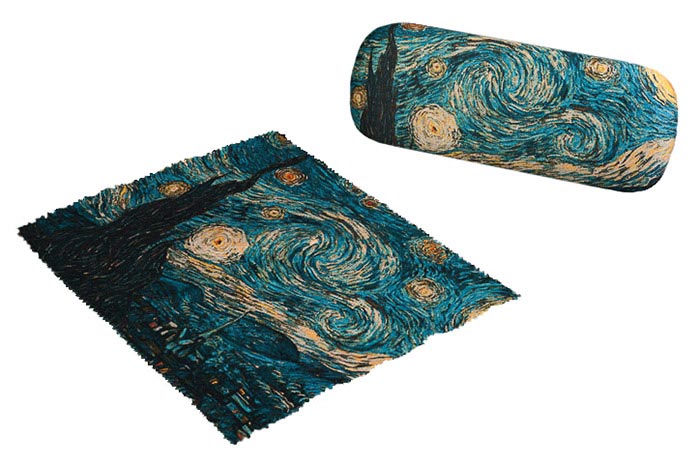
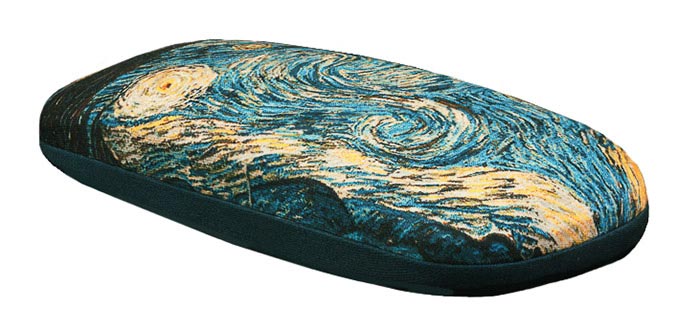
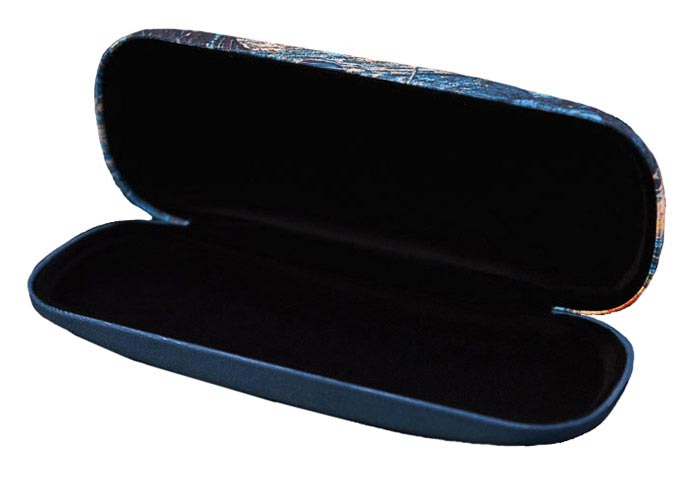
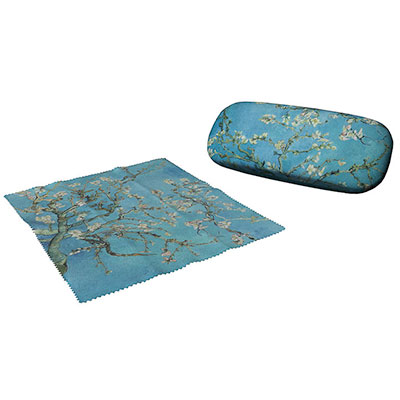
Vincent Van Gogh Eyesglass case - Starry night
17,00 €
REF : VVG-ELU-04
In stock
Only 1 in stock
Unavailable
Vincent Van Gogh Eyesglass case - Starry night
Solid hard-shell case with fabric cover pleasant touch, strong and secure metal clasp inside of case lined with soft felt.
This case suits as well for prescription glasses as for sunglasses.
Dimensions : 16 x 4 cm
Dimensions of the microfiber cleaning cloth : 15 x 18 cm
* * * * *
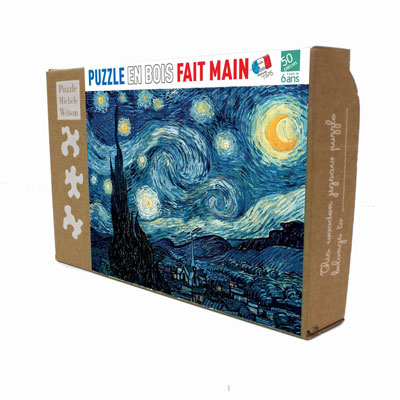
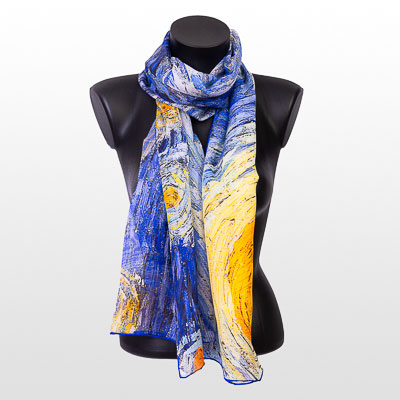
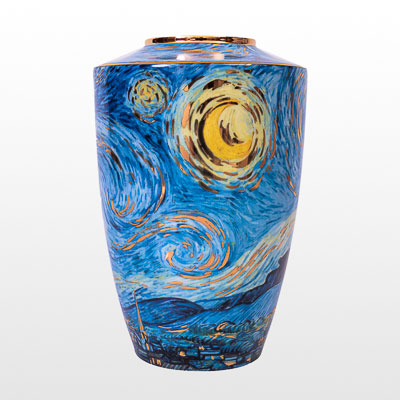
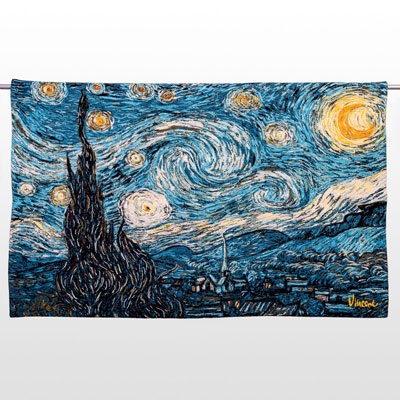
The Starry Night (1889)
Among the most iconic works in the history of art, The Starry Night by Vincent van Gogh holds a unique place. Painted in 1889 from the asylum of Saint-Rémy-de-Provence, this canvas seems suspended between dream and reality, between a cosmic sky and inner turmoil. For the art enthusiast, it offers an immersion into the intense and deeply sensitive universe of the painter.
It was during one of the most difficult moments of his life that Van Gogh painted The Starry Night, and perhaps this is what makes it a fundamental milestone of modern art.
Interned at Saint-Rémy after several episodes of crisis, he painted relentlessly. It was his main therapy, his way of expressing his inner suffering, but also his attempt to find beauty within himself and around him.
With The Starry Night, he doesn’t depict the actual scene he observed from his window (in fact, the village in the foreground is likely inspired by a memory from his Dutch childhood), but rather gives color and form to an emotional vision of what the night inspired in him.
Thus, the tall, dark cypress intertwines with the swirling darkness of the night sky, both pierced by the brilliant light of celestial bodies.
His technique involves bold, expressive brushstrokes where the thick paint gives almost a sculptural relief — known as impasto. Combined with the stark contrast of tones, this creates a true maelstrom that gives the painting its power and perfectly highlights what defines Van Gogh’s art.
The Starry Night can be interpreted in different ways:
As a spiritual work, evoking the infinite, the mystery of the universe.
As an emotional confession, expressing both the anguish and the hope of a hypersensitive man.
Or as an aesthetic experiment, a visionary take on the night landscape, far from the realistic depictions of the time.
Today, The Starry Night is a universally recognized masterpiece. It hangs in the MoMA in New York, admired by millions of visitors. Its success goes beyond the art world: it inspires songs, books, films, tattoos — it has become a visual symbol of human sensitivity.
What Van Gogh never knew in his lifetime — recognition, admiration, the love of the public — his work achieved after his death, with overwhelming force.

Post-impressionism
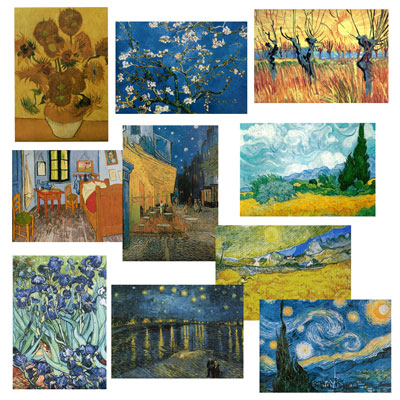
The post-impressionist period in painting (between the end of the 1880s and 1910s) followed the impressionist movement, which took place between the 1860s and 1890s. The post-impressionists took some of the techniques of impressionism, such as painting outdoors and using vibrant colors, but they also sought to go beyond impressionism by exploring new themes and using more structured forms. Among the most well-known post-impressionist artists are Paul Cézanne (1839-1906), Vincent van Gogh (1853-1890), Georges Seurat (1859-1891), and Henri de Toulouse-Lautrec (1864-1901). Paul Cézanne is known for influencing many subsequent artistic movements, including cubism. His paintings emphasize structure and form rather than color and light, as was the case with impressionism. Vincent van Gogh is best known for his vibrant and expressive paintings, which reflect his difficult life and unstable mental state. His paintings are filled with bright colors and sinuous lines, and they had a significant impact on modern painting. Georges Seurat developed a technique called "pointillism," which involves painting with small dots of color rather than brushstrokes. His paintings are characterized by precise use of color and light, and they also influenced cubism. Henri de Toulouse-Lautrec was known for his paintings and advertising posters that featured the nightlife and cabarets of Montmartre in Paris. His works are characterized by their simple and direct style, and they contributed to the popularity of post-impressionist art among the general public. The post-impressionist period also saw the emergence of many other talented artists, such as Paul Gauguin (1848-1903), André Derain (1880-1954), and Raoul Dufy (1877-1953). Although these artists all had unique styles, they were all influenced by impressionism and contributed to the evolution of painting art during this period.
Discover the artist
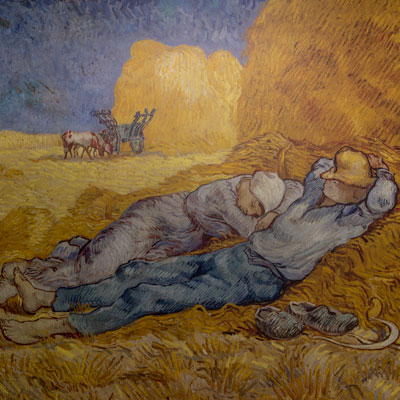
Van Gogh Vincent
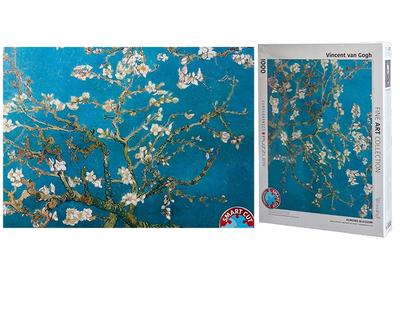
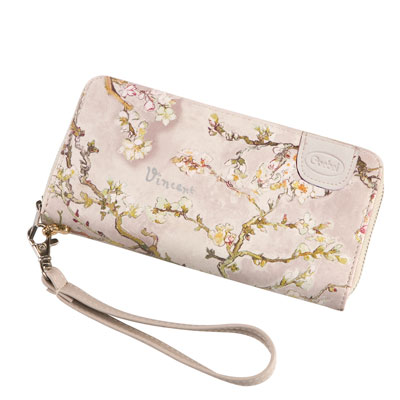
Vincent Van Gogh : Artistic products of the famous impressionist artist of the end of the 19th century ( 1834-1917 ). We propose a large choice of articles as umbrellas and silk scarves Made in France, art jewelry or artistic puzzles.